Best Construction Containers for Your Next Project?
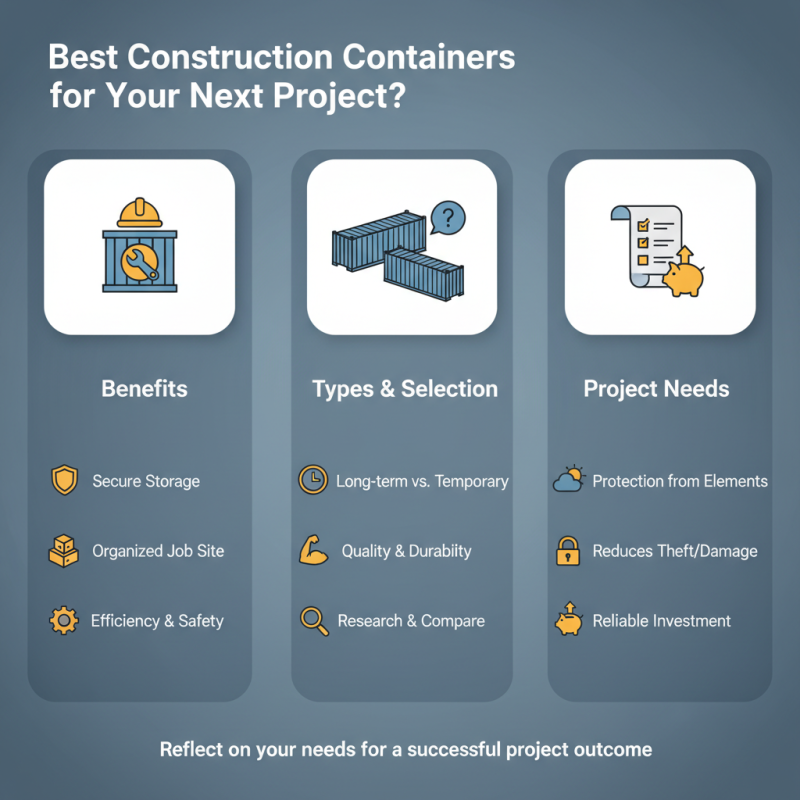
When planning a construction project, choosing the right construction container can make a significant difference. These containers provide secure storage for tools and materials. They are also crucial for maintaining an organized job site. A well-selected construction container adds efficiency and safety to any project.
Numerous options are available in the market. Different containers serve various purposes. Some are perfect for long-term storage, while others are ideal for temporary use. Quality and durability should be top priorities. However, not every container meets these standards. It's essential to research and compare before making a decision.
Consider the specific needs of your project. The right container ensures that tools and materials remain protected from the elements. Additionally, it reduces the risk of theft or damage. Sometimes, the cheapest option might lead to issues down the line. Investing in a reliable construction container is often a better choice. Reflecting on your needs will lead to a more successful project outcome.
Overview of Construction Containers and Their Uses
Construction containers come in various types, each fulfilling unique roles on job sites. They serve as
storage, workspaces, and even mobile offices. Understanding their uses makes it easier to choose the
right one for your project.
When selecting a container, consider size and purpose. A small container may suffice for tools. A
larger one may be necessary for storing equipment. Remember, the location and accessibility of the
container can impact efficiency. Not all sites can
accommodate large units easily. Take the time to assess your specific needs.
Tips:
Always check local regulations regarding container placement. This can save you from costly fines.
Additionally, ensure proper ventilation if using the container as a workspace. Poor airflow can
create uncomfortable conditions. Lastly, consider security features. Theft can be an issue on
construction sites, so protective measures are important.
Types of Construction Containers Available on the Market
When it comes to construction projects, selecting the right containers is crucial. Various types of construction containers are available to meet diverse needs. Shipping containers are a popular choice. They offer durability and security for storing tools and materials. Studies by the Containerization and Intermodal Institute show that using shipping containers can reduce transportation costs by up to 30%.
Mobile job site trailers are another option. These trailers provide an on-site office space and can enhance project communication. Their portability allows for easy relocation. A report from the National Association of Home Builders indicates that mobile offices can increase productivity by 20%. Additionally, bulk storage containers help in organizing materials. They cater to the growing need for efficient inventory management, crucial in tight deadlines.
One must consider the condition and capacity when choosing a construction container. Some may be damaged or rusted. Not every container is suited for all projects. This variation can lead to challenges. Proper assessment is vital. Each project has unique requirements, and the wrong choice can result in delays and increased costs. Investing time in understanding the options can pay off significantly.
Best Construction Containers for Your Next Project
Key Features to Consider When Choosing a Construction Container
Choosing the right construction container is crucial for any project. One key feature to consider is its size. For instance, a 20-foot container typically provides 1,200 cubic feet of storage. This space can be essential for managing equipment and materials on-site. According to a recent industry report, nearly 50% of project delays result from inefficient storage solutions. Thus, selecting a container that fits your project's scale can reduce downtime significantly.
Another important feature is durability. Construction containers must withstand harsh weather conditions and rough handling. Containers made from corten steel have enhanced resistance to corrosion. This can prolong their lifespan. A study by the Construction Industry Institute found that robust storage solutions can cut equipment losses by up to 35%. It’s essential to evaluate the construction materials used in your container selection.
Security is another critical aspect. Construction sites can attract theft, leading to significant financial losses. Containers equipped with secure locking mechanisms and reinforced doors provide peace of mind. Yet, not all containers offer the same level of security. Inspecting potential weaknesses is vital. A poorly secured container can be a vulnerability. By understanding these features, you can make an informed choice that directly impacts your project’s success.
Best Construction Containers for Your Next Project? - Key Features to Consider When Choosing a Construction Container
| Container Type |
Dimensions (ft) |
Weight Capacity (lbs) |
Material |
Weather Resistance |
Ideal Use |
| Storage Container |
20 x 8 x 8.5 |
4,500 |
Steel |
Yes |
General Storage |
| Office Container |
40 x 10 x 9.5 |
3,500 |
Steel/Aluminum |
Yes |
On-site Office |
| Refrigerated Container |
20 x 8 x 8.5 |
4,000 |
Steel |
Yes |
Food Storage |
| Flat Rack Container |
40 x 8 x 8.5 |
20,000 |
Steel |
No |
Heavy Equipment |
| Open Top Container |
20 x 8 x 8.5 |
5,000 |
Steel |
Yes |
Bulk Materials |
Benefits of Using Construction Containers for Project Efficiency
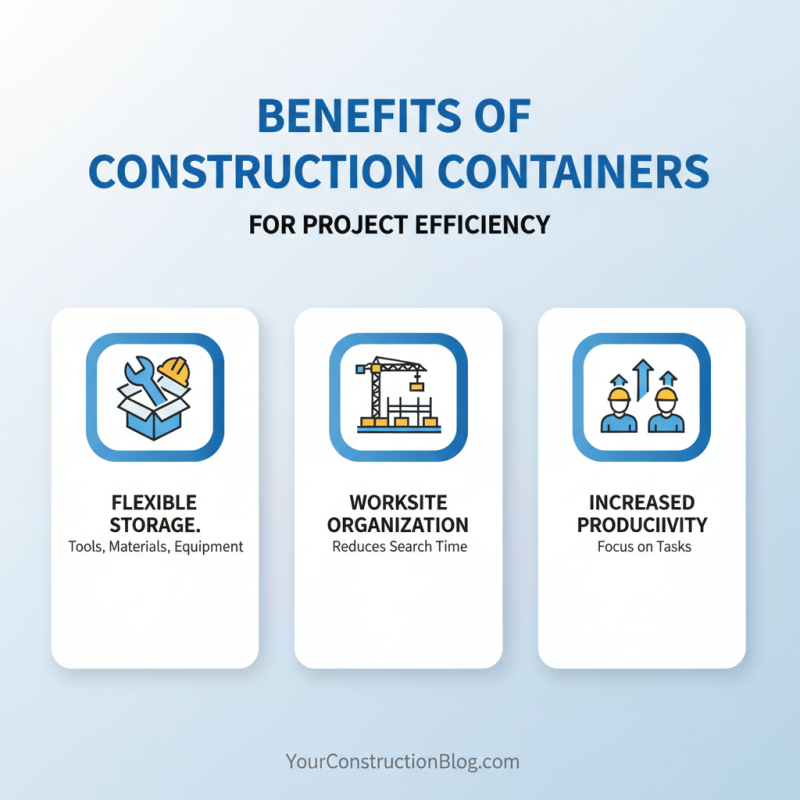
Using construction containers can significantly enhance project efficiency. These portable units offer flexible storage solutions for tools, materials, and equipment. This flexibility helps keep a worksite organized, reducing time spent searching for items. A streamlined workspace fosters productivity among workers, as they can focus on their tasks rather than manage clutter.
To maximize your efficiency, consider these tips. Ensure containers are easily accessible. Place them near high-traffic areas on the site. This minimizes the time it takes for workers to retrieve necessary materials. Regularly check the condition of your containers. A damaged unit can lead to safety hazards and increased costs.
Remember, the best layout may differ from project to project. Reflect on what works well and what doesn’t. Always be open to adjusting your container placement as the project evolves. This adaptability can lead to significant improvements in workflow and safety on the job site. Making small changes can lead to better coordination and communication among your team.
Best Practices for Maintaining and Organizing Construction Containers
Maintaining and organizing construction containers is essential for efficiency. A well-organized container saves time and ensures tools are easily accessible.
Begin by categorizing items based on type and usage. Store frequently used tools at the front, while seasonal or infrequently used items can go towards the back.
This method makes it easier to find essentials quickly.
Regular maintenance is key. Inspect each container periodically for wear and damage. Appropriately clean the interiors to prevent rust and ensure a safer workspace.
You can also implement a labeling system for quick identification. Clear labels can help minimize confusion and speed up retrieval. Simple practices go a long way in maintaining order and functionality.
Consider revisiting your organization methods regularly. What worked last month might not suit your current needs. You may find that some items can be eliminated or that new tools should be added.
Embracing flexibility in your approach can lead to more optimized workflows. Just by paying attention, you can create a more productive environment for everyone involved.