Top 10 Tips for Choosing the Right Cargo Container?
Choosing the right cargo container may seem straightforward, but it is anything but simple. With various sizes, materials, and features, the selection process can be overwhelming. According to industry expert John Miller, "The right cargo container can make or break your shipping efficiency." His experience highlights the importance of making informed choices.
Every decision impacts cost, safety, and delivery timelines. Cargo containers come in different configurations, each serving specific needs. Understanding your requirements is crucial. Think about what you are transporting. Will it be heavy machinery or fragile goods? These questions matter.
A cargo container's condition also plays a vital role. New or used? Inspected or not? Each choice carries risks. You may find a bargain, but it could lead to more issues later on. Reflecting on your choices today will lead to better outcomes tomorrow. Make sure you gather all essential information before committing to a decision.

Understanding Different Types of Cargo Containers and Their Uses
When choosing a cargo container, understanding different types is crucial. There are standard containers, refrigerated units, and specialized containers. Each type serves a unique purpose, catering to various shipping needs. According to the International Maritime Organization, around 90% of global trade is transported via containers. This fact emphasizes the importance of selecting the right one.
Standard containers are typically 20 or 40 feet long. They are versatile for most goods. Refrigerated containers, on the other hand, are vital for perishable items. The World Shipping Council reports that approximately 17% of cargo is temperature-sensitive. Specialized containers accommodate oversized or unusual items. These containers often require additional planning and handling.
It's essential to evaluate your specific needs. Inspect the container for rust, dents, or damages. While a cheap option may seem tempting, it could lead to costly losses. The right choice can enhance efficiency and minimize risk. Pay close attention to the container's logistics. Ultimately, understanding these details can significantly impact your shipping success.
Top 10 Tips for Choosing the Right Cargo Container
| Type of Cargo Container |
Ideal Use |
Dimensions (L x W x H) |
Weight Capacity |
Key Features |
| Standard Dry Container |
General cargo |
20' x 8' x 8'6" |
28,000 lbs (12,700 kg) |
Weatherproof, secure |
| Reefer Container |
Perishable goods |
40' x 8' x 9'6" |
44,000 lbs (20,000 kg) |
Temperature controlled |
| Open Top Container |
Oversized cargo |
20' x 8' x 8'6" |
28,000 lbs (12,700 kg) |
Removable roof, tall cargo |
| Flat Rack Container |
Heavy machinery |
40' x 8' x 2'5" |
60,000 lbs (27,200 kg) |
Easy loading, no sides |
| Tank Container |
Liquids |
20' x 8' x 8'6" |
26,000 lbs (11,800 kg) |
Specialized for fluids |
| High Cube Container |
Large cargo |
40' x 8' x 9'6" |
40,000 lbs (18,100 kg) |
Extra height, spacious |
| Ventilated Container |
Goods needing ventilation |
20' x 8' x 8'6" |
28,000 lbs (12,700 kg) |
Airflow openings |
| ISO Container |
General cargo |
20' x 8' x 8'6" |
28,000 lbs (12,700 kg) |
Standardized design, versatile |
| Ash Container |
Bulk ash transport |
40' x 8' x 8'6" |
45,000 lbs (20,400 kg) |
Dustproof and sealed |
| Car Carrier Container |
Vehicle transport |
40' x 8' x 8'6" |
30,000 lbs (13,600 kg) |
Specialized for cars, winches |
Assessing the Size and Volume Requirements for Your Cargo
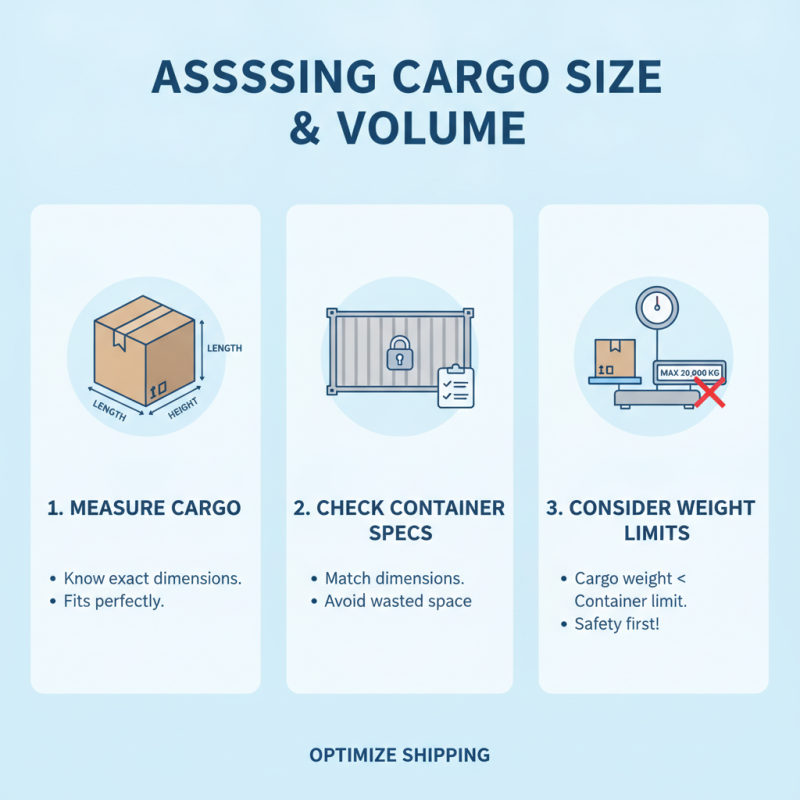
When choosing a cargo container, assessing the size and volume requirements is crucial. Start by knowing the dimensions of your cargo. Measure the height, width, and length accurately. This information helps you select a container that fits perfectly without wasting space. Consider the weight of your goods as well. Containers have weight limits that must not be exceeded.
Think about the nature of your cargo. If you have fragile items, extra padding may be necessary. You may need a container with specific features, like ventilation or climate control, for sensitive goods. Reflect on potential future needs. Could your hauling needs grow over time? Choosing a slightly larger container might save you money later.
Also, don’t forget about accessibility. Ensure that the container can be loaded and unloaded easily. If the loading area is tight, a smaller size may be your best bet. Consult with experts or use online tools to refine your selection. Remember, choosing the right size isn’t always straightforward. Mistakes can be costly, so take your time and weigh all factors carefully.
Evaluating Material Durability and Weather Resistance for Containers
When selecting a cargo container, material durability and weather resistance are crucial factors. Steel containers, for instance, tend to last longer and withstand harsher conditions compared to other materials. According to industry reports, corroded containers can lose up to 70% of their strength over time. This deterioration is often accelerated by environmental factors like humidity and salt exposure.
Weather resistance is equally important. Containers exposed to extreme temperatures and precipitation without proper treatment can suffer significant damage. A study found that untreated containers can develop leaks after just two years in harsh climates. Applying protective coatings can extend the lifespan significantly. However, not all coatings are created equal, and some may require frequent maintenance, leading to increased costs.
Investing in high-quality containers does not guarantee longevity. Regular inspections are necessary to evaluate their condition. Even well-made containers may develop weaknesses over time. Understanding the limitations of each material type will help make informed decisions. Research suggests that a thorough evaluation of the intended use and environment can help select the most appropriate container.
Analyzing Cost Factors and Budget Constraints for Container Choices
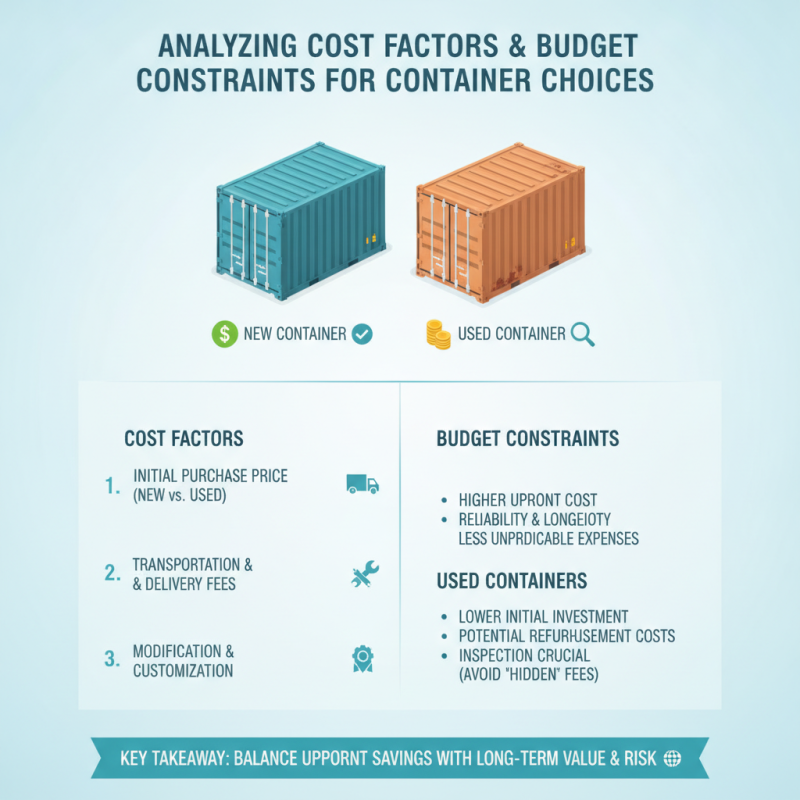
When selecting a cargo container, cost factors and budget constraints play a critical role. Understanding the pricing structure is essential. Initial costs can vary widely. Consider both new and used containers. New ones offer reliability, while used containers are budget-friendly options. Assess the condition of used containers carefully to avoid unexpected expenses.
Another vital aspect to balance is the size of the container. Standard sizes include 20-foot and 40-foot options. Think about your cargo volume. Choosing an oversized container leads to wasted space and higher costs. Conversely, a smaller container may not fit your needs, leading to potential shipping issues. Prices fluctuate based on size and availability; planning ahead can save money.
Lastly, factor in additional costs such as delivery and customs fees. Look for hidden charges that can inflate your expenses. It’s crucial to read contracts thoroughly and ask questions. Unscrupulous vendors may not disclose all costs upfront. By clarifying these points, you can avoid surprises later. Always ensure that your final choice aligns with your budget without compromising on quality.
Considering Accessibility and Transportation Options for Cargo Delivery
When selecting a cargo container, accessibility and transportation options are crucial. Over 60% of logistics professionals emphasize the importance of proximity to transportation hubs. A container placed near railroads or major highways saves time and reduces costs. Accessibility impacts your delivery speed and overall logistics efficiency. Containers that are easy to reach facilitate faster loading and unloading processes.
Consider the type of cargo being transported. Certain items require temperature control, while others need extra security. Reports indicate that 30% of shipments are delayed due to improper handling or location. Finding a site with flexible transportation options can mitigate these risks. It’s key to evaluate not only the container type but also how it fits into your overall transport network.
Moreover, urban areas may pose challenges with traffic and space. Choosing a location that accommodates larger vehicles and simplifies loading operations can lead to improvements in efficiency. According to recent studies, the right location can reduce logistics costs by up to 25%. Each step of the delivery process affects your bottom line. Always reflect on the transportation and accessibility choices made for greater effectiveness in cargo delivery.